Apartment Moving
Apartment Moving Checklist Melbourne: Lifts, Parking and Building Access
Plan lift bookings, loading access, parking, building rules and packing with this practical Melbourne apartment moving checkl
Read guide →A practical plan for dogs, cats and other companion animals—from identification and carrier preparation to moving-day safety and settling into the new home.
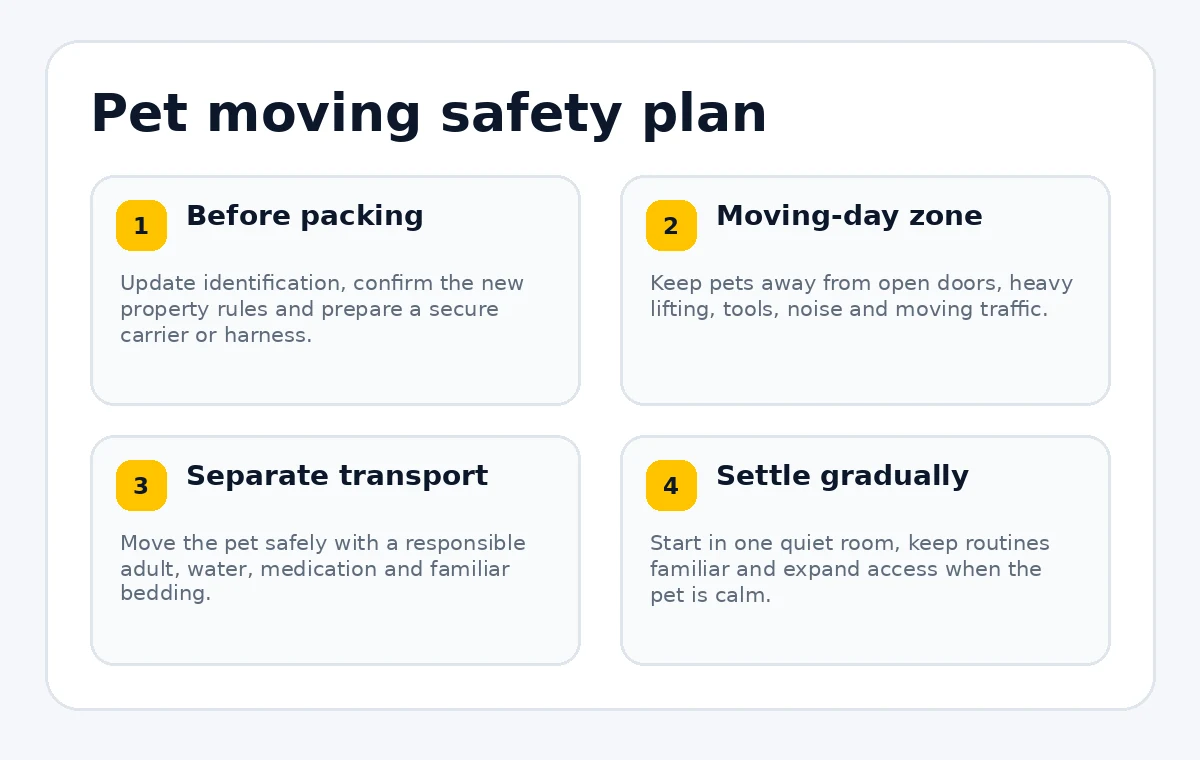
Pets experience a move through changes in routine, scent, noise and access to familiar spaces. The safest plan separates the animal-care tasks from the furniture-moving tasks. Decide who is responsible for the pet, where the pet will stay while doors are open and how the pet will travel to the new property.
Check the collar tag, microchip contact details and a recent photo before the move.
Prepare a secure carrier, crate or appropriate vehicle restraint and test it calmly in advance.
Choose a quiet closed room, trusted carer or boarding option away from loading activity.
If you are moving into a managed building, confirm pet and access rules together with the Melbourne apartment moving checklist.
Do not give sedatives or unfamiliar remedies without professional veterinary guidance. This guide covers household organisation, not medical care.
Keep the pet’s bed, bowls, toys and normal sleeping area available until late in the process. Pack one room at a time where possible, and keep feeding, walking and medication times consistent. Store tape, string, plastic wrap, sharp tools and small packing parts out of reach.
Keep this bag in the vehicle with the pet rather than inside the moving truck.
For a smoother household schedule, combine this section with the complete Melbourne moving-house checklist.
Begin with one calm room containing familiar bedding, water, food and the litter tray or toilet routine. Let the pet explore at its own pace. Keep doors and windows secure while the animal learns the new environment, and supervise outdoor access according to veterinary and local guidance.
| Early sign | Practical response |
|---|---|
| Hiding or staying close | Offer a quiet space and avoid forcing interaction or exploration. |
| Restlessness | Restore familiar feeding, walking, play and sleep routines. |
| Reduced appetite | Keep food familiar and seek veterinary advice if you are concerned or the change continues. |
| Door-focused behaviour | Double-check exits, tags and household communication before anyone opens a door. |
RSPCA Victoria recommends gradual introductions when animals are entering a new household with other pets. Give each animal space and do not force contact.
Tell the moving company that pets will be present, but arrange their supervision independently. Share both addresses, the moving date, stairs or lifts, parking, the major-item list and whether you need packing support. A complete brief helps the team minimise the period when doors must remain open.
For a written estimate, use the Hafiza Movers and Packers quote form.

This guide reflects the practical questions our booking and moving team uses to plan local house, apartment, furniture and office moves: inventory, access, parking, timing, fragile items and the right truck.
Read customer feedback · See recent Melbourne moves on Instagram
Use a secure closed room, a trusted carer or a suitable boarding arrangement away from open doors, lifting and moving traffic.
Pets should travel safely with a responsible person in suitable transport, not loose in the furniture compartment of a moving truck.
Pack food, water, bowls, medication, records, a carrier or restraint, waste or litter supplies, familiar bedding and emergency contacts.
Start with one secure quiet room, familiar scents and routines, then allow gradual exploration while keeping exits controlled.
Yes. Check that identification and contact details are current, and keep a recent photo available.
Practical Melbourne moving advice covering preparation, access, packing, costs and moving day.
Plan lift bookings, loading access, parking, building rules and packing with this practical Melbourne apartment moving checkl
Read guide →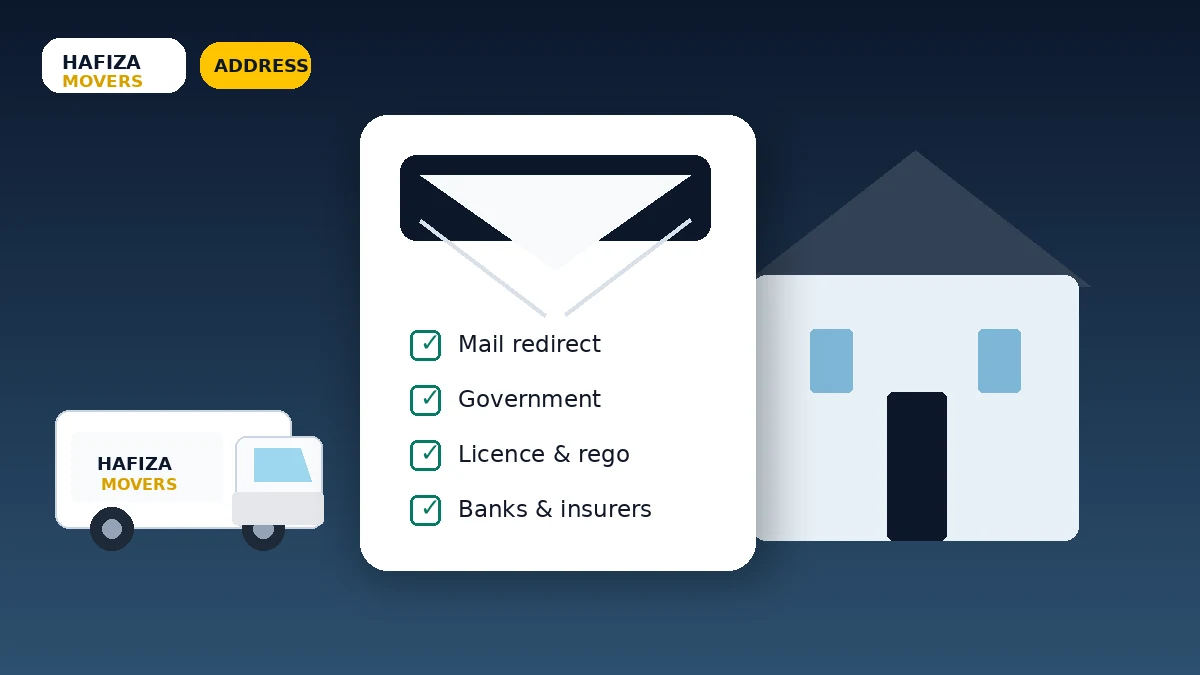
Use this Australian change-of-address checklist for mail, government, VicRoads, banks, utilities, insurance, healthcare, scho
Read guide →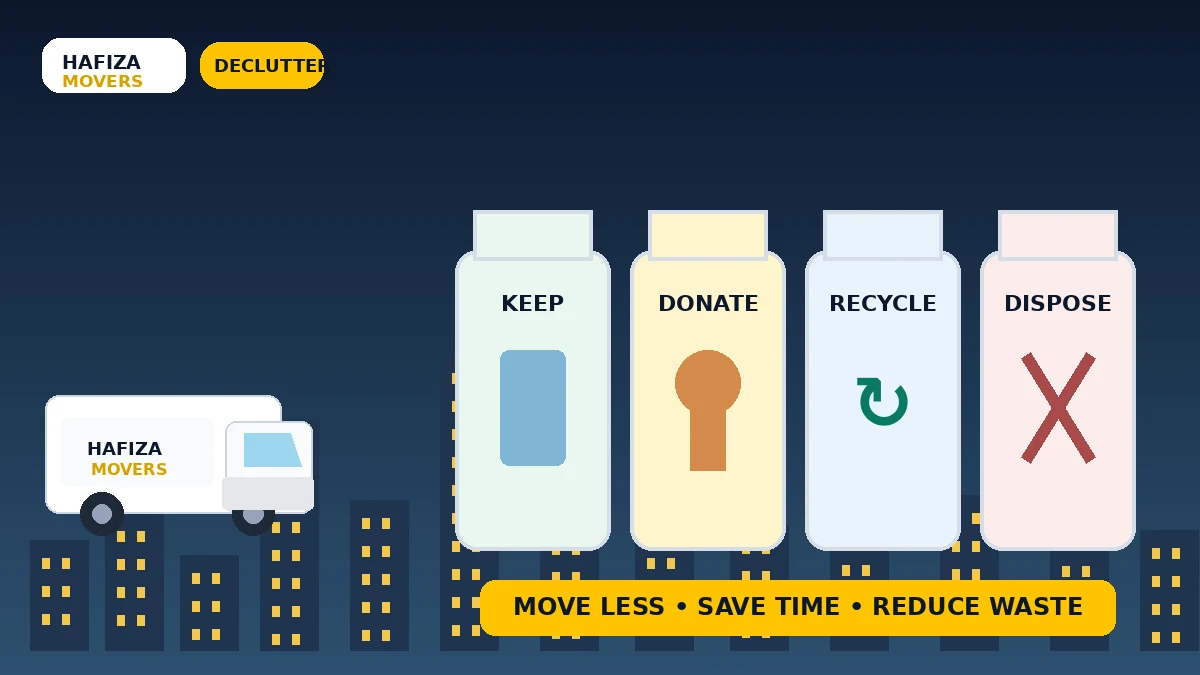
Declutter before moving with a room-by-room keep, donate, sell, recycle and dispose plan that reduces boxes, handling time an
Read guide →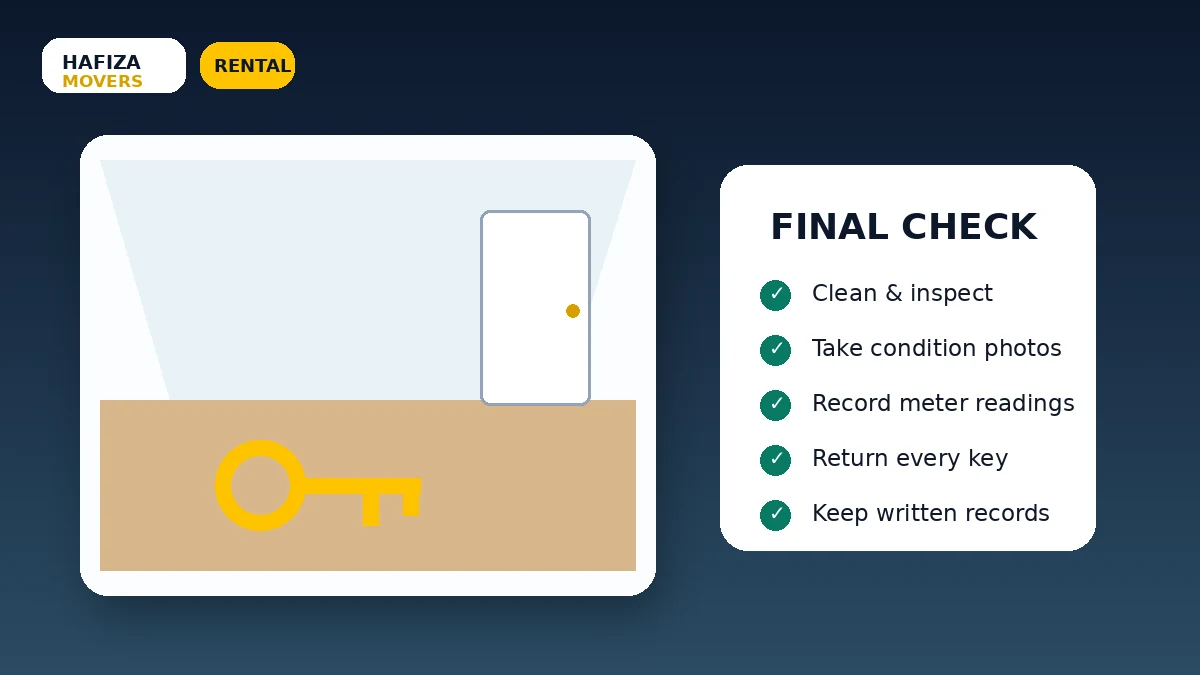
Follow this Victorian end-of-lease moving checklist for notice, cleaning, condition photos, utilities, keys and a smoother mo
Read guide →