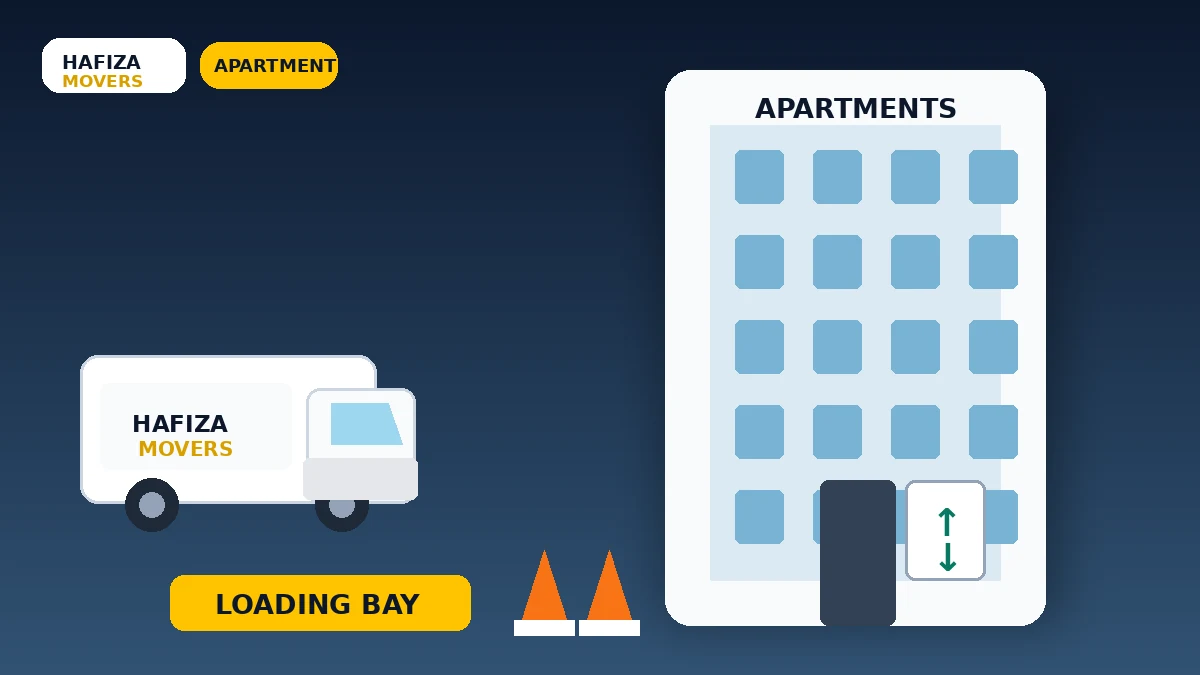
Apartment Moving
Apartment Moving Checklist Melbourne: Lifts, Parking and Building Access
Plan lift bookings, loading access, parking, building rules and packing with this practical Melbourne apartment moving checkl
Read guide →A practical packing guide for choosing cartons, controlling movement, protecting edges and labelling delicate household items for a Melbourne move.

Avoid newspaper directly against surfaces that may pick up ink. Towels can cushion some robust household items, but they do not replace a secure carton, edge protection or gap filling for high-value pieces.
Wrap each plate, group only a manageable number and place plates vertically like records in a suitable carton. Keep heavier pieces at the bottom and do not combine dense crockery with delicate stemware unless a purpose-made divided system protects both.
Follow the manufacturer’s instructions for your model, especially for large screens, speakers, computers and appliances. Hafiza Movers and Packers provides packing and unpacking assistance where customers prefer professional preparation.
Protect the face, corners and edges, then use a suitable mirror or picture carton. Keep glass-fronted pieces separate from loose hardware and mark the package to remain upright. Do not apply adhesive directly to artwork, painted frames or finished surfaces unless the product is specifically designed for that material.
| Item | Main risk | Protection focus |
|---|---|---|
| Mirror | Impact to corners or flex across the face | Corner guards, rigid face protection and upright handling. |
| Framed print | Broken glazing and frame abrasion | Surface layer, protected corners and a fitted carton. |
| Canvas | Puncture, pressure or moisture | Non-abrasive cover, rigid separation and no stacked weight. |
| Sculpture | Protruding or unsupported sections | Custom cushioning and a carton or crate that prevents movement. |
High-value or irreplaceable artwork may require a specialist art packer, valuer or insurer rather than standard household packing.
Remove shades and bulbs where appropriate, wrap each component separately and label the hardware. Never use a lampshade as a container for heavy items. For ornaments, support thin sections and handles without over-compressing them. Put very small valuable items in a personal valuables container that stays with you.
Before adding the final top layer, move the carton slightly. You should not hear pieces collide or feel the contents shift. Add suitable gap filling, then close all flaps and tape the main seam and vulnerable edges. Do not make the carton so heavy that safe handling becomes difficult.
Tell the moving team about delicate and high-value items before loading begins. Fragile cartons should be stable, upright where required and protected from shifting furniture. Keep documents, jewellery, medicines, keys and small irreplaceable items with you rather than in the general load.
For furniture and large household pieces, see furniture removals. For a complete preparation timeline, use the Melbourne moving checklist or request a moving quote.

This guide reflects the practical questions our booking and moving team uses to plan local house, apartment, furniture and office moves: inventory, access, parking, timing, fragile items and the right truck.
Read customer feedback · See recent Melbourne moves on Instagram
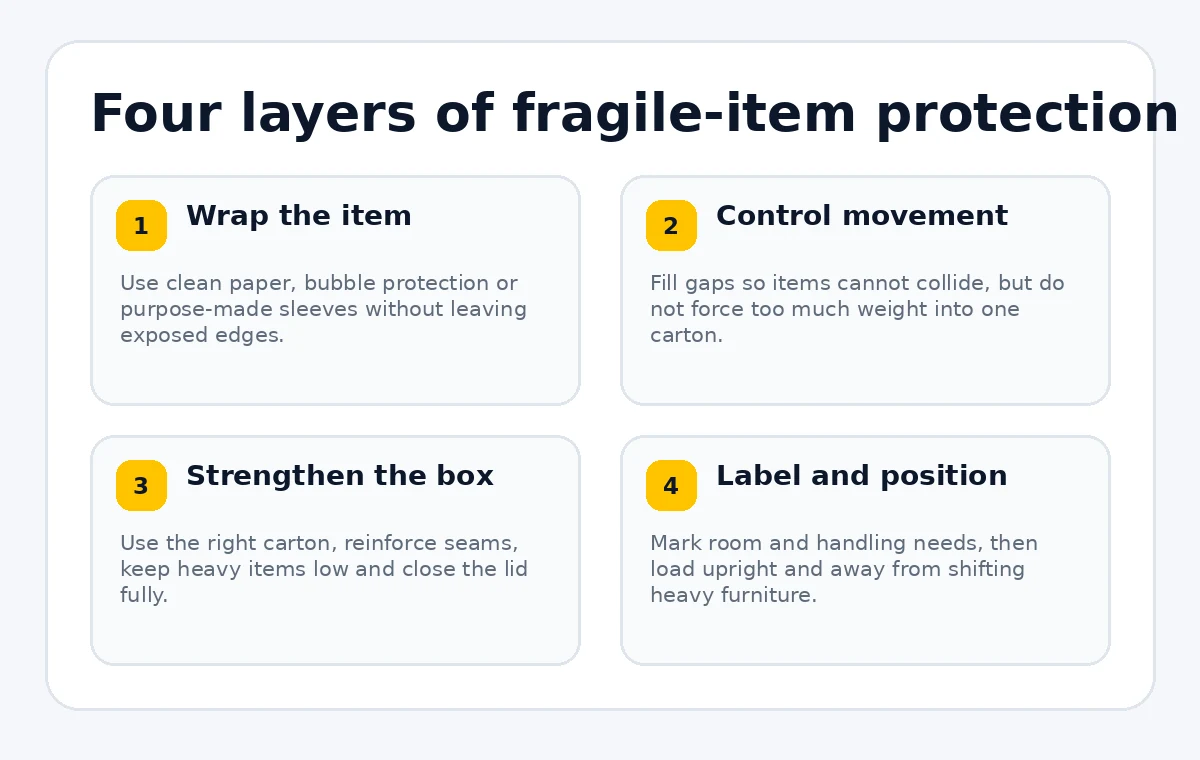
Use clean packing paper and suitable protective material, wrapping each item separately and controlling movement inside a strong carton.
Plates are commonly packed vertically like records in a suitable cushioned carton because this can reduce broad face pressure.
Keep a flat-screen television upright and follow the manufacturer’s transport instructions. Use original or purpose-made fitted packaging.
A gentle movement test should reveal no rattling or shifting. The carton must also close fully without bulging or excessive weight.
Some pieces need a specialist art packer, custom crate, valuer or insurer. Discuss value, construction and cover before deciding.
Practical Melbourne moving advice covering preparation, access, packing, costs and moving day.
Plan lift bookings, loading access, parking, building rules and packing with this practical Melbourne apartment moving checkl
Read guide →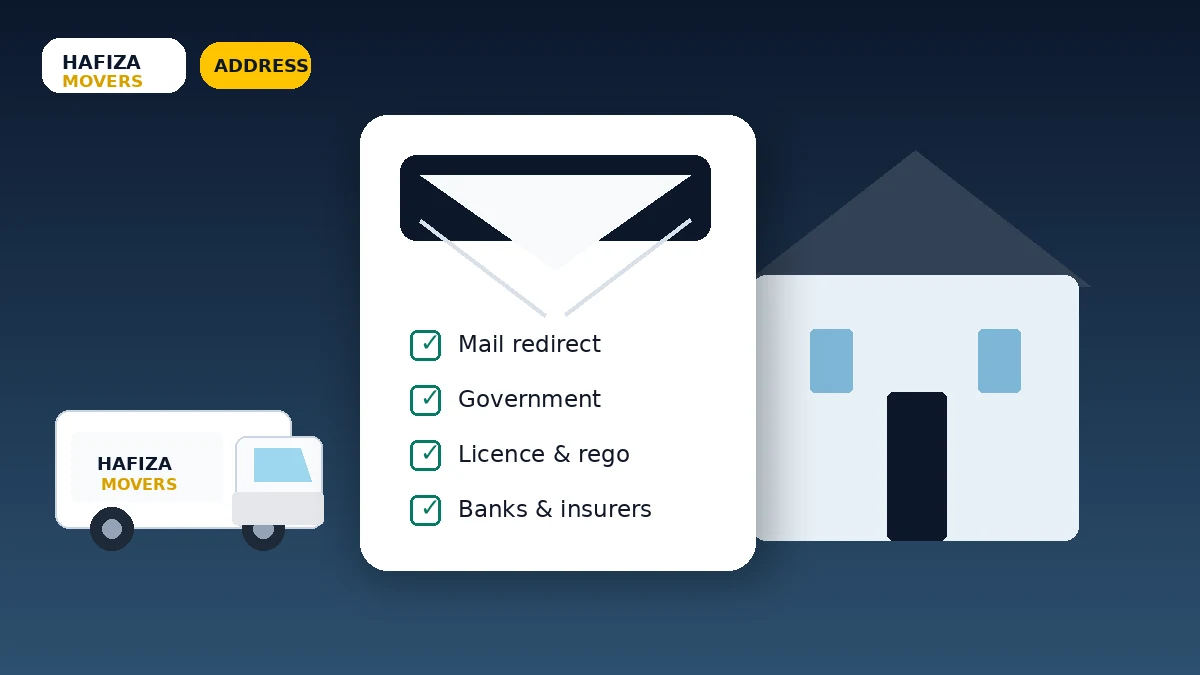
Use this Australian change-of-address checklist for mail, government, VicRoads, banks, utilities, insurance, healthcare, scho
Read guide →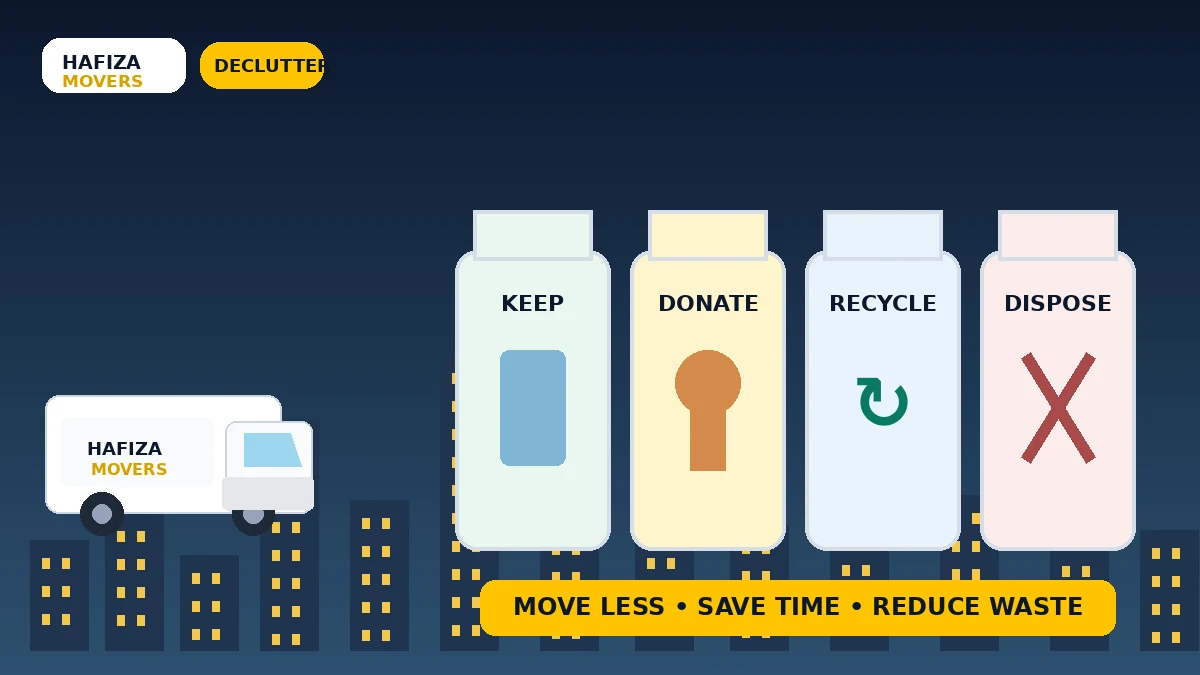
Declutter before moving with a room-by-room keep, donate, sell, recycle and dispose plan that reduces boxes, handling time an
Read guide →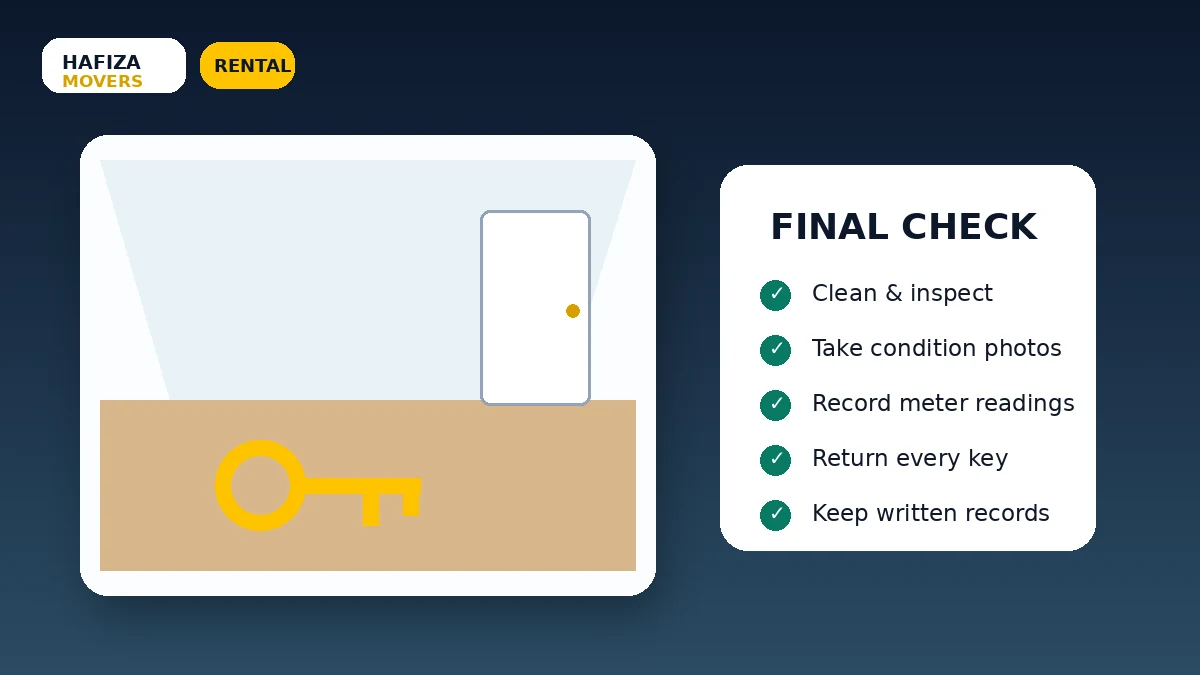
Follow this Victorian end-of-lease moving checklist for notice, cleaning, condition photos, utilities, keys and a smoother mo
Read guide →